AIR-G is a collaboration of radiologists, radiology residents, MR physicists, PhD students, Engineers, CT and MR technicians from the Ghent University Hospital.
NEW: our research group is joining forces with orthopedic surgery and oncology. Together, we create the Ghent musculoskeletal AI imaging hub!
05/2026
Dominique Rosillon, Manouk de Hooge (UGent) , Thomas Van Den Berghe (UGent) , Gaëlle Varkas (UGent) and Emilia Gvozdenović
Performance of artificial intelligence tools in axial spondyloarthritis imaging assessment : a systematic literature review and meta-analysis
JOINT BONE SPINE. 93(3).
PMID: 41621467 DOI: 10.1016/j.jbspin.2026.106036
02/2025
Adam Mayer, Timothy G Brandon, Amita Aggarwal, Ruben Burgos-Vargas, Robert A Colbert, Gerd Horneff, Rik Joos, Ronald M Laxer, Kirsten Minden, Angelo Ravelli, Nicolino Ruperto, Judith A Smith, Matthew L Stoll, Shirley M Tse, Filip Van den Bosch, Walter P Maksymowych, Robert G Lambert, David M Biko, Nancy A Chauvin, Michael L Francavilla, Jacob L Jaremko, Nele Herregods et al
Effect of characteristic inflammatory and structural pelvic magnetic resonance imaging lesions on expert assessment of axial juvenile spondyloarthritis
JOURNAL OF RHEUMATOLOGY. 52(2). p.165-172
PMID: 39814440 PMCID: PMC11788049 DOI: 10.3899/jrheum.2024-0696
06/2025
Pamela F Weiss, Timothy G Brandon, Amita Aggarwal, Ruben Burgos-Vargas, Robert A Colbert, Gerd Horneff, Ronald M Laxer, Kirsten Minden, Angelo Ravelli, Nicolino Ruperto, Judith A Smith, Matthew L Stoll, Shirley M Tse, Filip Van den Bosch, Walter P Maksymowych, Robert G Lambert, David M Biko, Nancy A Chauvin, Michael L Francavilla, Jacob L Jaremko, Nele Herregods et al
Do the provisional Paediatric Rheumatology International Trials Organisation enthesitis/spondylitis-related juvenile idiopathic arthritis criteria capture youth with axial spondyloarthritis?
ARTHRITIS CARE & RESEARCH. 77(6). p.785-791
PMID: 39721765 PMCID: PMC12122225 DOI: 10.1002/acr.25491
11/2026
Discover How AI is Transforming Healthcare: Insights from EOS Magazine
At RheumaFinder, we are leveraging the power of AI to revolutionize the incidental detection of clinically relevant structural joint lesions. By utilizing large datasets and advanced algorithms, we are enhancing the accuracy of incidental detection of these lesions, which can be indicative of, amongst others but not limited to, conditions such as spondyloarthritis. This technological advancement opens opportunities for increased lesion detection, with the ultimate goal of timely and effective diagnosis and interventions, ultimately improving patient outcomes and transforming healthcare delivery.
The Power of AI in Healthcare
The greatest advantage of AI lies in its ability to swiftly process and analyze vast amounts of data. This capability enables incidental detection of clinically relevant structural joint lesions, ultimately with the hope to provide healthcare professionals with valuable insights to enhance patient care.
However, AI is not without its challenges. Its limitations in contextual understanding and potential biases underscore the ongoing need for human oversight in medical diagnostics. At RheumaFinder, we recognize the importance of balancing AI’s capabilities with expert human judgment to deliver the best possible outcomes for patients.
11/2026
Rheumafinder ondersteund door CrossCare
Het project CrossCare 2.0 stimuleert, ondersteunt en versnelt innovaties in de zorg. RheumaFinder maakt gebruik van dit programma om de implementatie van AI-gestuurde beeldanalyse voor incidentele detectie van klinisch relevante structurele gewrichtsletsels te optimaliseren binnen ziekenhuizen. Dankzij CrossCare kan RheumaFinder zijn technologie testen, bevragen en doorontwikkelen in samenwerking met zorginstellingen en eindgebruikers.
CrossCare biedt een zorgproeftuinsetting en een innovatiefonds om zorginnovaties op grotere schaal te realiseren. Het is een grensoverschrijdend initiatief van Interreg Vlaanderen-Nederland, dat zowel praktisch als financieel ondersteunt. Binnen dit project worden innovaties bevraagd door twee zorgproeftuinen in Vlaanderen en Nederland.
Tijdens het eerste succesvolle CrossCare-project (2016-2021) werden 30 zorginnovaties ondersteund. Op 17 mei 2023 werd de opvolger CrossCare 2.0 goedgekeurd. In de komende drie jaar zal dit project opnieuw bijdragen aan de ontwikkeling en implementatie van zorginnovaties, waaronder RheumaFinder’s bevraging van ziekenhuizen om AI-oplossingen voor incidentele detectie van klinisch relevante structurele gewrichtsletsels te verfijnen.
Bedrijven en zorgorganisaties kunnen via CrossCare 2.0 financiële steun ontvangen uit het innovatiefonds. Daarnaast ondersteunen zorgproeftuinen de geselecteerde innovaties door middel van demonstraties, testen en evaluaties met eindgebruikers. Deze proeftuinen zijn gespecialiseerd in co-creatie en live testen in de dagelijkse praktijk van zorggebruikers en -professionals, en stellen hun expertise gratis ter beschikking binnen dit project.
Met ondersteuning van CrossCare 2.0 kan RheumaFinder zijn technologie verder valideren en afstemmen op de behoeften van ziekenhuizen, wat bijdraagt aan nauwkeurigere detectie van structurele gewrichtsletsels en het afstemmen van de technologie op de verwachtingen van de eindgebruikers.
02/2020
Project granted by the "King Baudouin Foundation"
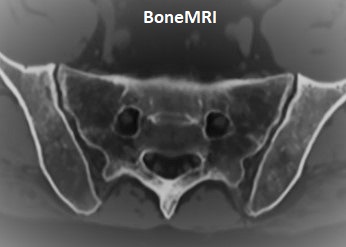
The project: “BoneMRI of the spine in patients with spondyloarthritis for detection of structural lesions” of L. Jans was granted 5000 euro by the “King Baudouin Foundation”.